Wednesday, December 10, 2014

effective exploration and use of form and material

I have been reading about the way in which Froebel's gift number 7 was introduced to students in the 1800s. Gift number 7 consisted of sets of flat tiles both square, and various triangles. The idea was to move from geometric solid shapes toward a material more akin to drawing. The number of pieces in each set would be overwhelming and chaotic if the full set was presented at the start. So students were first given 3 pieces, and then 7, and then larger sets with which to construct various forms. If they had been given the full set, and told to make something, where would they start?

The idea that learning should move from the simple to the complex, from the easy to more difficult, and from the concrete to the abstract. To simply put a huge set in the hands of kids would overwhelm their creativity, neglecting to provide a starting point for their creative process.

Yesterday at Clear Spring School, my first grade children made Christmas trees. They start with a board shared by two students. They take turns cutting from one corner all the way down through to the other. Then when the board is divided in two, the various layers of the tree are cut, leaving only 1 tiny end piece that goes to waste from the process. That the pieces come from a single piece gives a sense of the transformation available in a piece of wood, and without waste. If a child is given only 3 tiles from a larger set and is encouraged to find all possible shapes that might be derived from those 3 tiles before moving on, I believe you can see the thoroughness of that which takes place. When a child is given too much stuff, wastefulness and inattentiveness to both form and material are encouraged. Whereas, to make a tree from wood, with nothing wasted but the sawdust swept from the floor at the end of the lesson conveys a sense of completion and responsible use of resources.

Today I have the last week of my home school class.

Make, fix and create...

Tuesday, December 09, 2014

fists of fury? divergent views of humanity.

A paper in 2013 by Morgan and Carrier, Protective buttressing of the human fist and the evolution of hominin hands suggested that the human hand evolved through sexual selection, with protective buttressing to protect it from damage as it was used to batter the faces of opponents. They followed up their research by suggesting that the human skull evolved to safely take a punch. Both of these theories met a firestorm of opposition.

In my view it was not the human combative role that led to evolutionary advancement through sexual selection but that particular individuals had the power to manipulate and control their environments through the application of dexterity.

There may be a few women drawn to the clenched fist, they in hopes of finding protection. But it seems that one of the sexiest images used in advertising has been the man (or woman) with a tool belt. A man who can fix things in the real world shows a certain prowess that by extension, can win hearts. You can read some of the correspondence on "fists of fury" Here.

Today in the Clear Spring School wood shop, my elementary school students will be making tiny wooden Christmas trees. In the process, the boys and girls will be developing their own creative and cooperative capacities. Make, fix and create...

Monday, December 08, 2014

testing the steel edge's sharpness...

One of the things that led me to Nääs, and made me know that I would find a treasure trove of Sloyd there, was that there were only two places in the world that had copies of Hand and Eye, a journal of Educational Sloyd and Kindergarten that was published in the late 1800s. I wanted to stick my nose in those journals and the only other place they were known to be found was in the British Library.

There are things that cannot be fully explained. For instance, what a craftsman learns by using his hands. And so perhaps poetry can come close. My new friend Barbara sent a poem by Harry Martinson, translated from Swedish Människans händer:
Human Hands

The hands’ experience is touch
their life among things is varied,
full of silent content.
They do not hear but are there in vibrations.
They do not see but know how it is in dark cellars.
When velvet is appraised they are there,
and whetstone and scythe blade they silently test.
They sense with light touch the steel edge’s sharpness.
How have they managed to gather all their subtle experiences
of wool and grit, of down and steel,
of smooth surface and of prickly globe thistle,
of silky talcum and of all types of flour.
Their register is unprecedented
from shiny silks to coarse sacks,
from coarse files and kitchen graters
to the smooth nails of newborns
and the sheen of touch on the blooms of everlastings.
They live in the country of sensation where touch is all
and where touching’s mystery raises its bridge between nerve and steel.
But in the butterfly’s dust they find their limit.
                                            --Harry Martinson
There are ways to test the sharpness of the steel's edge. Some will take the sharp blade and scalp hair from the arm. Some will test the blade on a thumbnail. If it digs rather than slides, it can be adjudged just sharp enough. If you look dead on at the tip, squint with eyes tight to overcome whether you have your glasses on or off, you can, on a dull knife, see a bit of light looking back. On a truly sharp knife, you'll see nothing but the cosmos reflected equally from both sides, left and right.

Early educators knew that the senses were key, that experience even for poets should come before words and that the partnership between hand and eye is essential. Students were not to be confined to death at desks, but were to be set free, under the guidance of the wise. Then folks came along, and decided education would be much better if they put a motor on it.

In school, I am getting ready for my first grade students to make tiny wooden Christmas trees, knowing that these trees are truly a symbol of much more that just the Christmas holiday season. The tree is a symbol of everlasting life and light in the darkness of the winter solstice.

Make, fix and create...

Sunday, December 07, 2014

imagination...

Kindergarten Children and workbench, 1956
My show last night was hardly worth the effort but for the opportunity to hang out with artist friends and drink cranberry juice and vodka. I sold 3 books and no boxes. As one man confessed (not to me directly, but that I overheard) "these boxes are lovely, but I don't know what I'd put in one."

A friend of mine, and former student, Kathleen, has been teaching woodworking and making pet urns and crematory urns in Chicago. At least with pet urns and crematory urns, no imagination is required. You're dead by the time you need one. So perhaps I should make a change of course, and specialize in making something that requires less imagination.

So where does imagination come from? It's just like any other muscle. It grows strong through being exercised, and as we begin losing active imagination as early as kindergarten, and are carefully groomed to be complaisant and responsive consumers of standardized stuff, the market for creative work has declined in recent years.

The photo is from blog reader Todd Willmarth, and his uncle is one of the kindergarten kids gathered around a workbench in Spring Valley, Minnesota in 1956. The workbench is similar in height to the ones we use at the Clear Spring School. Thanks Todd, for a view into a more creative time.

When I visited at the University of Helsinki in 2008, I found my way (inadvertently) to the woodshop where Kindergarten teachers working on master's degrees were being taught to teach woodworking. The shop was right next door to the hall where Sloyd teachers were presenting academic papers (much more like social science research) on teaching various crafts. That small woodshop and the teacher's work there was the highlight of my visit and a thing that most conference attendees never saw.

Make, fix and create...

Saturday, December 06, 2014

You begin.

While some will be at the mall or on-line chasing a few goods, others will be in the pursuits of better, in their kitchens baking bread or cookies, or in their sewing rooms or workshops, crafting themselves. Their skills, either new or freshly honed will add little to the economy, but add great depth to the warmth of our human culture.

Some of my work set up and ready to sell.
Today I'll show and sell my work at the Lux Weaving Studio on White St. here in Eureka Springs. Hours, 4-8:30 PM. I'll have boxes, books and some small furniture for sale. In addition, some of my earlier commissioned work can be seen today during the Eureka Springs Preservation Society's Tour of Homes, in the home of Susan and Jim Nelson.

The following is a poem by Canadian poet Margaret Atwood, a favorite sent to me by a new friend.
You Begin

You begin this way:
this is your hand,
this is your eye,
this is a fish, blue and flat
on the paper, almost
the shape of an eye
This is your mouth, this is an O
or a moon, whichever
you like. This is yellow.

Outside the window
is the rain, green
because it is summer, and beyond that
the trees and then the world,
which is round and has only
the colors of these nine crayons.

This is the world, which is fuller
and more difficult to learn than I have said.
You are right to smudge it that way
with the red and then
the orange: the world burns.

Once you have learned these words
you will learn that there are more
words than you can ever learn.
The word hand floats above your hand
like a small cloud over a lake.
The word hand anchors
your hand to this table
your hand is a warm stone
I hold between two words.

This is your hand, these are my hands, this is the world,
which is round but not flat and has more colors
than we can see.

It begins, it has an end,
this is what you will
come back to, this is your hand.

Margaret Atwood 1978
I think I have a new favorite poem, too.

When my  4 year old great niece was here last week, she colored like that. I gave her a small lantern that, being cheaply made, ceased to work. I used my tiny screwdriver and some duct tape to fix it as she watched patiently. She learned that it is fun to fix things and no longer such a terrible thing when new things break. It becomes the excuse to look inside.

Make, please fix and please create... With the world going as it is, our children will each need each of these skills.

Friday, December 05, 2014

20 making days left...

If you've no skill or understanding to impart to a next generation, you might as well stop reading right now and never come back to the blog again, or take what you don't know how to do and base your further explorations on that... In school, I've been trying to get my students started early in the process of conveying how-to knowledge by having them write brief how-to pieces. One submitted her draft yesterday on how to hammer a nail. I had hoped that she would take the photos herself, but she chose the easy way that is ever present on the internet... She simply copied from the vast array of images that are available. Another student is making a wooden sword, and taking the photos with her iPhone... a bit more pleasing and also readily available approach. Several of my students are interested in making Jefferson Ciphers, a system of coding and decoding messages through a cylindrical device, so one made his first prototype in yesterday's class.

I attended an art show last night and chatted briefly with a fellow craftsman of my own age who has become concerned that he may only have another 10 to 15 years before he will have to make drastic changes in his life. His biggest concern is that he may not be able to manage his same level of creativity and exploration. The tools that he has developed for his use will be meaningless in untrained hands.

On the same subject, I got an email from a person involved in "Technology Education," suggesting that my use of the term as interchangeable with manual training, manual arts, industrial education and all the other myriad terms that have been applied to woodshop has been mistaken. He said, "My understanding of Technology Education (in brief), is, the study of the history and evolution of technology and technology’s influence on society." The first use of the term technology in all this pertaining to education, I beleive was Uno Cygnaeus' use of the term "techne"... a term still in use in Scandinavia in reference to the manual arts. Technology in the US is often used in reference to tools and devices, rather than referring to technique, which also comes from from the Greek,  tekhnologia.
technique (n.) Look up technique at Dictionary.com
1817, at first especially in criticism of art and music, from French technique "formal practical details in artistic expression" (18c.), noun use of technique (adj.) "of art, technical," from Greek tekhnikos "pertaining to art," from tekhne "art, skill, craft in work" (see techno-).
technology (n.) Look up technology at Dictionary.com
1610s, "a discourse or treatise on an art or the arts," from Greek tekhnologia "systematic treatment of an art, craft, or technique," originally referring to grammar, from tekhno- (see techno-) + -logy. The meaning "study of mechanical and industrial arts" (Century Dictionary, 1902, gives examples of "spinning, metal-working, or brewing") is first recorded 1859. High technology attested from 1964; short form high-tech is from 1972.
It would be pleasant for some teachers to address technology purely as an historical subject. They could stand at the head of the class and lecture on the subject. But it would be dry for their students and would ignore the human element and the human-hand in the development of human culture... Technique,  or techne, describes the human relationship with the instruments that have developed human culture. I humbly suggest that the isolated study of the history of the development of technological devices would ignore the learning potential that would come from the making and actual use of those devices.

A great and good man, an atheist, who had rescued hundreds of children from the Nazi holocaust was asked how it could be possible to be such a good man without believing in some particular religion or another. He informed the interviewer from the BBC that he believed not in God, but in ethics.

Regardless of your religious persuasion or lack of persuasion, there is a clear reason to engage our children in craftsmanship. The values imparted through it are the foundation of human culture.

For those of the Christian persuasion, we now have 20 making days til Christmas. For shoppers this season, all hell has broken loose. If you want some quiet shopping for hand-made work, please attend my show at Lux Weaving Studio, tomorrow evening, Friday December 6, 4-8 PM.

Make, fix and create...

Thursday, December 04, 2014

not every lego in the world can do this...

 Blog reader, science teacher, David Kings sent this photo from his iPad. Most parents and grandparents will relate  to the scene that unfolds at David's feet. The message is from Lego and suggests that both boys and girls will find pleasure creating with their blocks.  The note states, "It's imagination that counts, not skill. You can build whatever comes into your head, the way you want it." I agree completely with the second part of the statement.

Creativity and skill walk hand in hand. Imagination and creativity take place both in the mind and the nimble fingers of a child. Dexterity applied to working with real materials has value, and skill is not an ingredient to be ignored.

The images below are from yesterday's home school class at the Clear Spring School. The children have been making trains. One has sliding doors, and another, the coal car is filled with a collection of polished stones.

Yesterday, I spent an hour with my favorite electrician figuring out how to get adequate power to my school lathes, in our relocated wood shop on the main campus. It took some serious head scratching and some time tracing circuits to discover the simple approach. It is amazing how when a problem is first viewed, the mind races to complicated and expensive solutions. But paying strict attention to the law of parsimony can lead to good results.

  In this post, I am not attempting to disparage Legos. They are wonderful until they get out of hand and as a parent or grandparent, you step on them in the night. I do want to make the point that if you are buying presents for a child, you might consider real tools, and some materials with which they can exercise both creative imagination and skill.

Doing easy things has a certain pleasure. Wooden parts don't snap together like legos. You must come to an understanding of materials and develop skill in the making. Doing difficult things that require a higher level of attention, builds both character and intellect. My home school students have legos at home. They build amazing things with them, and they are already wanting to sign up for my next class.

Thank you David, for the photo.

Make, fix and create...

We have 20 making days, before the Christmas holiday.


Wednesday, December 03, 2014

I Sløjdsagen Et Inlæg

Otto Salomon had a favorite author he quoted on the use of the knife. N. Christian Jacobsen's book, written in Danish and published in Oslo in 1892 is extremely rare and I was able to get a copy from the Danish National Library by inter-library loan. I intend to carefully scan the pages and make them available to anyone who would care to make a translation. Here is what I have so far and what inspired me to want to read this book and to think it might be worth translation:

“The knife demands total attention and permits no mechanical work. Furthermore, the knife can produce—unlike the plane, as an example—curved surfaces in form work. This makes the knife superior when it comes to the development of a sense of form and beauty.” [summarized by HansThorbjörnsson]

In the meantime,  I have a class this morning for home schooled students and in the afternoon will begin setting up for my Saturday art show.

We are down to 21 making days before Christmas, and consumers are busy shopping for gifts and bargains. If you are a maker, instead, you will have skill remaining after all the packages are opened, and so many meaningless gift objects are sent unceremoniously to the landfill or thrift store.

Make, fix and create...

Tuesday, December 02, 2014

Number 5

Yesterday I gathered and sanded the parts for Froebel's gift number 5. This is likely the set of blocks that inspired Frank Lloyd Wright's career as an architect. You can build amazing structures with this set of blocks and its easier than you might think to put away at the end of your play.

The blocks fit neatly within the wooden box. Stack the blocks to form a cube, slide the box over the top, and all the blocks off the table onto the lid. Use the lid to hold the blocks in the cube,  then turn the box over and slide the lid in place.

It is not real easy for small children with small hands to do, but then in the early days, parents and teachers were just as concerned with children developing manual dexterity as they were with the input of information. Later in the development of Kindergarten, they decided that these small blocks were too difficult for the children to manage, and much larger blocks were introduced. Those larger blocks turned play with blocks into a social endeavor (a good thing),  as children built things together in groups, but still, the development of manual dexterity, and the need for it, will not go away. Think of the surgeons who may also have gained their skill and intelligence through the use of Froebel's blocks. Are sensitive and caring dexterity any less important today?

I believe that the truth was more likely that such small blocks were difficult for the adult teachers to manage. Froebel worked with small groups of children in a small school and Kindergarten was originally conceived as being a small group activity with close personal supervision. As Kindergartens became widely introduced, they had to compete on an equal economic footing with schools based on drill and recitation, in which it was relatively easy to demand all children do exactly the same thing at the same time, oppressive as that may be. So Kindergartens crowded as many as 50 or more students in a classroom, all doing the same thing at the same time. It must have been impossible to keep complicated sets of small blocks intact. If you can imagine 50 small children sliding all these blocks off the table and onto the box lids at the same time, you can visualize catastrophe. I suspect that there were times when the teacher was left in the classroom long hours just putting blocks back in their appropriate boxes.

In any case, to make Gift number 5 for your child or grandchild, might lead to something more than you might expect... Skill in your own hands, dexterity and intelligence in theirs.

Here is a short list of gifts that give.

Tools, sets of blocks, gift certificates to craft lessons and cooking classes, how-to books (and the encouragement to do what is offered inside,) lessons for your son, daughter, or grandchildren in your own wood shop.

Today at the Clear Spring School, my primary students finished their puppets.

We have 23 making days before the Christmas holiday.

Make, fix and create...

Monday, December 01, 2014

24 making days til the seasonal onslaught of consumption is nearly complete

Your invitation to an art show.
Readers might enjoy this treatise on things by Mihaly Csikszentmihalyi. "Why We Need Things," is from a book, History From Things, Essays on Material Culture. It suggests that we have an unreasonable addiction to serial possession of objects that would be meaningless to us is we were more deeply engaged in processes of personal growth. These objects are killing us and the planet, and there is no better time to consider their impact than the season in which we become obsessed with the acquisition and dispersal of meaningless stuff. The following quotes are from Csikszentmihalyi.
...proliferation of artifacts would not be a problem if not for the fact that objects compete with humans for scarce resources in the same ecosystem. Forests are big destroyed to provide lumber, wood and pulp; metals and oil are consumed to propel vehicles. The potential energy contained in our environment is dissipated as we covert it into objects, which rapidly become obsolete: thus we accelerate the process of entropy that degrades the planet.
We like to think that objects are in our control, but Csikszentmihalyi suggests that this is not the case.
"In some respects, artifacts are like new species that reproduce themselves alongside biological ones. Looking at an illustrated history of musical instruments or weapons or vehicles, it is easy to imagine that one sees the record of an evolutionary process tending toward greater and greater complexity of function. We like to think that because objects are human-made, they must be under our control. However, this is not necessarily the case. An object with a specific form and function inevitably suggests the next incarnation of that object, which then almost certainly will come about about. For instance, the first crude stone missile begat the spear, which begat the arrow and then the bolt, the bullet, and so on to Star Wars. Human volition seems to have less to do with this development than do the potentialities inherent in the objects themselves."
My email these days is full of offers for special deals that are claimed to too good to pass up. They are not. What might be too good to pass up, however, is the opportunity to find personal growth the fulfilling of the obligation to give gifts this holiday season,  by making those gifts yourself.
"The addiction to objects is of course best cured by learning to discipline consciousness. If one develops control over the processes of the mind, the need to keep thoughts and feelings in shape by leaning on things decreases. This is the main advantage of a genuinely rich symbolic culture; It gives people poetry, songs, crafts prayers, and rituals that keep psychic entropy at bay. A Brahmin can afford to live in an empty home because he does not need objects to keep his mind on course. In our culture, mathematicians, musicians and others adept at the use of symbols are also partially freed from reliance on an objectified consciousness. We very much need to learn more about how his this inner control can be achieved. Then objects can again be used primarily as instruments rather than as projections of our selves, which like the servants created by the sorcerer’s apprentice, threaten to drown their masters with relentless zeal."
Is there a difference between making gifts, and purchase of them? When you make what you give, you are engaged in personal growth in the process. You have truly given in such cases, a gift of your better self. If you plan, still to buy gifts, buy those that encourage personal growth in others. Hand made gifts from your own community will encourage the development of human culture in your own city or town. There no better way to "develop control over the processes of the mind" than to become engaged in craftsmanship, music and the arts. Make something beautiful and useful and encouarge others to do likewise.

I am getting ready for a show this coming weekend in which my work will be available for sale. You are invited. Lux Weaving Studio, 4-8 PM, Saturday December 6, and the following Saturday, December 13.

Make, fix and create...

Sunday, November 30, 2014

the value of manual arts and industries...

The following is the conclusion reached by Robert Keable Row in 1909.
"If the tentative conclusions reached in this study are in the main right, the meaning of manual arts and industries in education is most significant and far reaching. It means that we must thoroughly reorganize our school curricula, elementary, secondary, collegiate; that, instead of spending nearly all of their time sitting at desks, working over books, pupils will spend about half their of their time in some kind of work room, or in gardens or fields; that after pupils have attained a certain maturity, the education system will provide that they may work for pay half the time and pursue academic studies during the other half; that the vast majority will continue in school years longer than they do now; that among the masses of the people in industrial and commercial life there will be a constant rise in intelligence, in physical vigor, in economic efficiency, in prosperity, in moral stamina, in aesthetic interest, and in joy and satisfaction in life."
The change that he proposed never came in full measure. The notion of keeping children confined at desks never lost its appeal to those academicians and power brokers who kept them slavishly at it. But there is value still in doing real things, with real outcomes providing real meaning in children's lives.

Turning the tide of American education is a gargantuan task. In the New York City school system alone, there are 1 million students and over 1 million desks to fill. Watching over those 1,000,000 students there are 89,000 "pedagogical positions". Add the custodial staff and administration, and there are 134,000 people to nudge toward a renewed vision of learning in one city alone.

To have students doing real things instead of sitting at desks would require huge changes. It would take more trained staff, conversions of classrooms to work shops, the addition of equipment and new educational model in which the hands are given greater purpose. So, how does one accomplish a gargantuan task?

Start small. We can start with the simple understanding that we learn to greatest lasting effect when we learn hands on. If we can agree on that we can, over time, create more meaningful education.

 Make, fix and create...

Saturday, November 29, 2014

rightly conducted...

This from Robert Keable Row, 1909, the addition in bold parenthesis is mine:
Rightly conducted, manual arts and industries furnish abundant exercise for all forms of intellectual activity, under conditions most favorable to mental (and moral) development.

If the purpose of education is that of creating situations of dependency, in which people are enchained as consumers and left without the where-with-all and without the initiative or power to create change in their own lives, we've made the right schools for it. Put 30 or more students in a classroom, stuffed to the point that teachers have no choice but to invest the greater part of their attention in maintaining control, rather than in the delivery of meaningful content, and you've placed both the teachers and students in an untenable situation. After years of dependency, and idleness students may turn to crime simply to have some control over their own lives.

Would it not be better that they be offered craftsmanship instead? It lies within the scope of the child's most natural inclinations. As proposed by Comenius, and as shared so many times before in this blog that I feel redundant in bringing it up,
"Boys ever delight in being occupied in something for the youthful blood does not allow them to be at rest. Now as this is very useful, it ought not to be restrained, but provision made that they may always have something to do."
Instead, we leave them restrained in seats, losing thereby, our most powerful educational resource, their attention. The following is from David Henry Feldman's paper, the Child as Craftsman:
To see a child as a craftsman means to see him as a person who wants to be good at something. It also suggests that the child continually takes pride in accomplishment and has a sense of integrity about his work, regardless of the actual level of the work produced. The notion is somewhat akin to Robert White's competence motivation, except that White's notion implies more of a need to feel mastery over uncontrolled forces in the environment. The child as craftsman no doubt is moved by what White refers to as "effectance motivation," but the metaphor is intended to go beyond this to include a more direct link to specific fields of endeavor and to suggest why some activities are so much more compelling to a given child than others...

Perhaps the most important implication of the metaphor is to suggest that it may well be the main purpose of education to provide conditions under which each child will identify and find satisfaction through a chosen field or fields of work.
The price we pay for for failing to engage children in craftsmanship is enormous. Think of the waste of lives of those young men and women who turn to crime, or spend their early years incarcerated, instead of becoming productively and creatively engaged. Think of the loss of dignity, that comes from our failing to enlist them in craftsmanship.

I know this blog won't be one that gains the attention necessary to turn the tide, change the direction in American education. So we must take matters into our own hands.

Make, fix and create...

Friday, November 28, 2014

Ferguson...

Protests over the events of Ferguson, Missouri have spread throughout the world, with protests now taking place in London and other cities. Ferguson is not an isolated problem, but rather one with deep roots in the moral culture. A boy steals, a cop kills him dead with twelve shots. A protest erupts and the cops and local administration leave the dead boy lying in the streets for hours. Further protests are completely mishandled by the police who respond to citizens' concerns by bringing in tear gas, troops in full body armor and armored personnel carriers. After a time of relative quiet as folks wait for justice, a trial is held in which the grand jury found the cop innocent of wrongdoing. Further protests erupted, just as one would expect. And finger pointers on both sides explode in the media and on the web.

The following is from Robert Keable Row in The Educational Meaning of Manual Arts and Industries, 1909.
A very large number of children now have but little in the way of manual occupation or responsibility, still less of systematic training (in doing real things), in the home. Out of school hours they play, read, practice music (all of which is good), but they do not learn to work with their hands. There can be no question that a training that gives a boy or girl a sense of ability to control material things, that leads to frequent experience of satisfaction through producing something worth while is a great moral force. The new industrial and social conditions demand that this training be given in schools.
...If pupils are trained to use good materials, to measure and weigh accurately, to do work that will bear inspection inside and out; if the training leads them to see and appreciate the difference between sincerity and sham, it cannot fail to develop moral fibers of genuine integrity. This is the more certain because, while pretence in a recitation is elusive, in handwork the product stands with more or less permanence to commend or condemn.
In the 60's it was decided that creative hand work would only be offered to those not going to college. Then it was decided by powers that be that every child must be destined to college, and pushed there whether he or she was interested in further academic work or not. And so we faced a huge drop-out rate in American high schools. Gradually, shop classes and home economics were phased out as being unnecessary to our nation's kids. Machines and foreign workers would take on all aspects of production, so skilled hands were no longer of vital interest to our nation's leaders. Wood shops and auto shops were considered high risk, too high a risk even for those kids who were designated as "high risk." And so by these days, we have virtually eliminated the manual arts from our schools, even in those places where they are needed most.

Can you begin to grasp the stupidity of all that? Woodworking in schools was originally promoted for two reasons. One was that our nation needed skilled hands (and we still need those hands.) The other was that our students needed moral fiber, that came through the exercise of their hands in the crafting of beautiful and useful things. The real value of the student's work, as described by Otto Salomon was not in the object made but in the students. The true product of craftsmanship lies within the moral fiber of our citizenry. And so we come back to Ferguson, Missouri.

I would simply remind my readers that craftsmanship is a moral force that self-replicates when it is nurtured. Children are drawn to exercise it when given the opportunity to nourish themselves through it. If we want to improve society and remove the risk of the destructive forces of misunderstanding and contempt, we must empower our children's creative capacities. Robert Keable Row had noted that
"The movement to make training in certain industries part of school work is at least 400 years old. Martin Luther advocated it as a means of moral reform, pointing out that skill and industrious habits conduce self-respect, self-reliance, and self-support, and that inefficiency leads to idleness, and idleness to vice and crime. This view was urged by many moral and religious reformers in different countries for many years."
But less than a generation of educational "reform" removed those opportunities for manual arts training from most schools.

We have Shiva, the god of destructive transformation on one hand, and human creativity on the other. We choose what we get, one or the other.

History shows the value of manual arts and industries as means of human development. -Robert Keable Row, 1909

Make, fix and create...

Thursday, November 27, 2014

thanksgiving...

New work at Lucy's craft table
In the US, this is our Thanksgiving holiday, a time to gather with family and friends and remember to be thankful for our many gifts. I am thankful each day to have a wood shop and the opportunity to share skill and creative capacity with a new generation. Yesterday I invited my great niece from South Florida to join me in the wood shop to make tops, button toys and flip cars.

As a four year old, it was her first time to work with wood, her first time to play with a button toy and her first time to spin a top. I asked if she had any toy cars, but in a world of Barbie princesses, there have been no toy cars in sight. I'm not pointing out anything that is unusual in this. The artificial world is becoming a predominant feature on the cultural landscape, and unless we take some pleasure in introducing the making of real things, we will lose the human craftsmanship that built our civilization.

This last week was a difficult one. Ferguson, Missouri exploded in violence, and I am reminded of the essential role that craftsmanship plays in the human scheme of things. Many religions, including Hinduism, recognize the fine line between human constructive capacity and the power to destroy.  They call that capacity, Shiva. Black Elk had a vision of it, that led him on his path as a great teacher of the Sioux nation.

We fail our own nation by failing to engage children in fixing, making and their own creative inclinations, and the pent up frustration that comes from the failure to be involved in the basic functions of our humanity can build up to explosive levels. The craftsman and the destroyer are two edges of the same sword.

When we are engaged in craftsmanship, we invest ourselves in the making of beautiful and useful things, but also in the development of self.

It may be difficult for some, those who are academically or politically encumbered, to understand such things. But craftsmen may understand such things in ways that much of our world cannot, and it is our duty to explain a few things.

Make, fix and create...

Wednesday, November 26, 2014

today in my woodshop...

I am ready to apply finish to more boxes to fill holes in my inventory due to filling orders for the Historic Arkansas and Crystal Bridges Museum stores. I have a small Christmas show next week and will need boxes.

We have Thanksgiving guests, and I've prepared lessons in woodworking for my 4 year old great niece. It will  be her first experience making her own toys, and this kind of experience can have profound effect. Memories are most strongly reinforced when activities take place in our own hands and tangible evidence learning is the outcome.

You don't need to have your PhD in psychology to understand the principles involved. But schools in general aspire to lower standards of participation in learning than what we all know works best.

The image above is the cover of the Marc Adams School of Woodworking 2015 catalog. I complimented Marc on his design and learned that the photo was taken of him and his son 21 years ago. Craftsmanship is a thing that must be encouraged, one generation to the next.

Enrollment is now open for those who have not taken classes before at Marc Adams School of Woodworking. I have 4 adult classes available there and will have 3 classes in the coming year at the Eureka Springs School of the Arts.

Using Froebel blocks, I laid out the simple example used to illustrate the Pythagorean Theorem. You can read about the Pythagorean theorem in The Duplication of the Square in Plato's Meno (An Appendix to Glenn Rawson's translation).

In the photo above, the sum of the area of the two squares laid upon a and b equals the area of the larger square of the hypotenuse. a2 + b2 = c2 or this animation may help.


Make, fix and create...

Tuesday, November 25, 2014

aside from a lovely well crafted box

Aside from a lovely well crafted box, the blocks of each of Froebel's  gifts, 2-6 present the child with a sense that the universe is ordered and stable for his manipulation and unlimited exploration. A cube is discovered within a cube. The cube comes apart for imaginative play and arrangement, and then goes back, restored to its original form.

To return gift number 6 to the box, simply arrange squares as shown in yesterday's photo, stack the assembled squares on top of each other to form the cube, and then slide the box (with lid removed) over the top. Then hold the lid up to the edge of the table and  slide the box and contents off the table and onto the lid. Use the lid to hold the blocks inside as you turn it over. When right side up, the lid slides in place, and the blocks are ready to put away that their mystery may be enjoyed another day. Children can take delight in keeping their blocks neat and in their original form. Parents and teachers can take delight that when the play is over the blocks are put away.

Make, fix and please create...

Monday, November 24, 2014

into the woods.

Froebel's gift number 6
Froebel gift set number 6 consists of 36 blocks, 1/2 in. thick. There are 18 blocks just as used in Gift number 4, 1 in.  wide x 2 inches long. In addition there are 12 square half blocks, and 6 column half blocks. With these few blocks wonderful things can be built. These stack to form a 6 layer cube that can be stored neatly in the box.

We are off this coming week at Clear Spring School due to the Thanksgiving holiday, but I need to say just a few words about last week. Each year when the ticks and other biting insects are killed by our first freezing days of winter, the woods surrounding the Clear Spring School campus are opened for play. This happened last week, just as it does each year with an official ceremony called "opening the woods."

The children are given specific rules to follow. One of these is that they must respond to the bell and come immediately back to the school grounds. There are very clear boundaries set for their exploration. The tradition is for them to form non-exclusive groups and for them to organize forts. When my daughter was in Clear Spring School, she came home each day with stories about "Double Tree" and about the competition with rival groups for sticks and other building supplies. Building forts and organizing play in the woods remains one of the most memorable of her experiences at the Clear Spring School. In the school wood shop on Thursday, the kids all wanted to make tools to work on their forts and signs to mark them out and with the woods having just opened for the season, there was genuine excitement in the air.

There are two very good reasons for children to play in the woods. The first is that the children need to be engaged in direct investigation in the outdoors. We accomplish this in part through extensive outdoor education, field trips and camping, but they also need to establish personal relationships to the outdoors. The second has to do with what Matti Bergström has called the "black white game." What parents and teachers want children to do he calls the white game. What children want to do of their own inclinations he calls the black game. In the latter, children explore and establish their own relationships with others and with material reality. He said in discussion of this game that human culture must arise new within each generation. And so it will. Children from Clear Spring School are equipped for that. We call it "play" and it happens at recess, but it is educational. And when you see students at Clear Spring running excitedly through the woods, there is a reason for it.

Tim Holton sent two related links from KQED: Forest Kindergartens Push Back Against Academic Focus For Young Kids and Let ‘Em Out! The Many Benefits of Outdoor Play In Kindergarten. At Clear Spring School, outdoor education is nothing new and starts in pre-primary school. Thanks, Tim.

In my own shop today, I will be making sets of Froebel blocks, taking a few photos and writing about it.

Make, fix and create...

Sunday, November 23, 2014

rabbeted bottoms

I am working on gifts 5, 5b and 6.

One of the easiest ways to install a plywood bottom in a box is by using a router table and rabbeting bit to route the space for it to fit. Unfortunately, most rabbeting bits are large and while they can be adjusted to cut a small rabbet for small boxes, that requires adding a large bearing which keeps it from routing into the corners.

Amana has made a small rabbeting bit that is perfect for making small boxes. It has a bearing diameter of 3/16 in. and routes a 1/8 in. rabbet, which makes it perfect for use with the Froebel boxes I'm making for gifts, 5, 5b and 6.

In the photos above and below, you can see it in use.  When the rabbet has been cut, simply measure the inside space, cut the bottom to the same size and then round the corners.

For a single box, shaping each corner with a disk sander makes sense as it can be quickly done. In a production setting, many can be routed at the same time on the router table by standing them on edge and using a round over bit of the required radius.

Make, fix and create...


Saturday, November 22, 2014

Pythagorean theorem

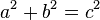
The image below shows the use of Freobel's gift number 5 to demonstrate the validity of the Pythagorean Theorem, one of the foundational principles of mathematics. Most students are required to memorize it as
a^2 + b^2 = c^2\!\,  but without being taught its relationship to geometry as shown above. B squared is not just a number multiplied by itself but represents a shape.

In accounting, facility in the addition, subtraction and application of numbers is important. That is one side of math. In engineering, facility with shape is important. That is the side of mathematics that we tend to ignore in school but that can be applied in wood shop.

When I was taught the Pythagorean theorem, it was presented in a purely numeric form, completely divorced from the concept so well illustrated both above and below. Squared and cubed numbers as well as their roots were left dead for me, just as they are too often left for dead in today's math.

Froebel's gift number 5 as used to represent the Pythagorean theorem is shown below.

Make, fix and create...

Friday, November 21, 2014

5, 5b and 6

I have been working on gifts 5, 5b and 6 and the chapter that includes these gifts. This photo shows the set of blocks that Froebel designed as set number 5. This was the set of blocks used by older children to understand the Pythagorean theorem.

How many children were able to understand the Pythagorean theorem through the use of these blocks, I don't know. But facility for math is not only the use and understanding of numbers. It involves "spatial sense," such as one might develop through manipulation of blocks. Choosing points along a number line is an important skill, as is judging relative proportions and scale.

Even G. Stanley Hall, recognized that learning through the hands touched the unconscious mind in ways that conscious recitation based learning could not. I repeat a quote from my blog post of two days ago:
Where work that the boy has made himself with his own hands goes, there his interest follows. His reading is stimulated; the inner eye back of the retina is opened, and that priceless though semi-conscious education, which is by hints and suggestions and which is far more rapid and indelible than anything in the memorized and examinable region of the soul, goes on by leaps and bounds. Thus skill with the fingers is harnessed to development of the cerebral neurons, as it should be, and we are working in the depths and not the shallows of the soul. - G. Stanley Hall.
Make, fix and create...